
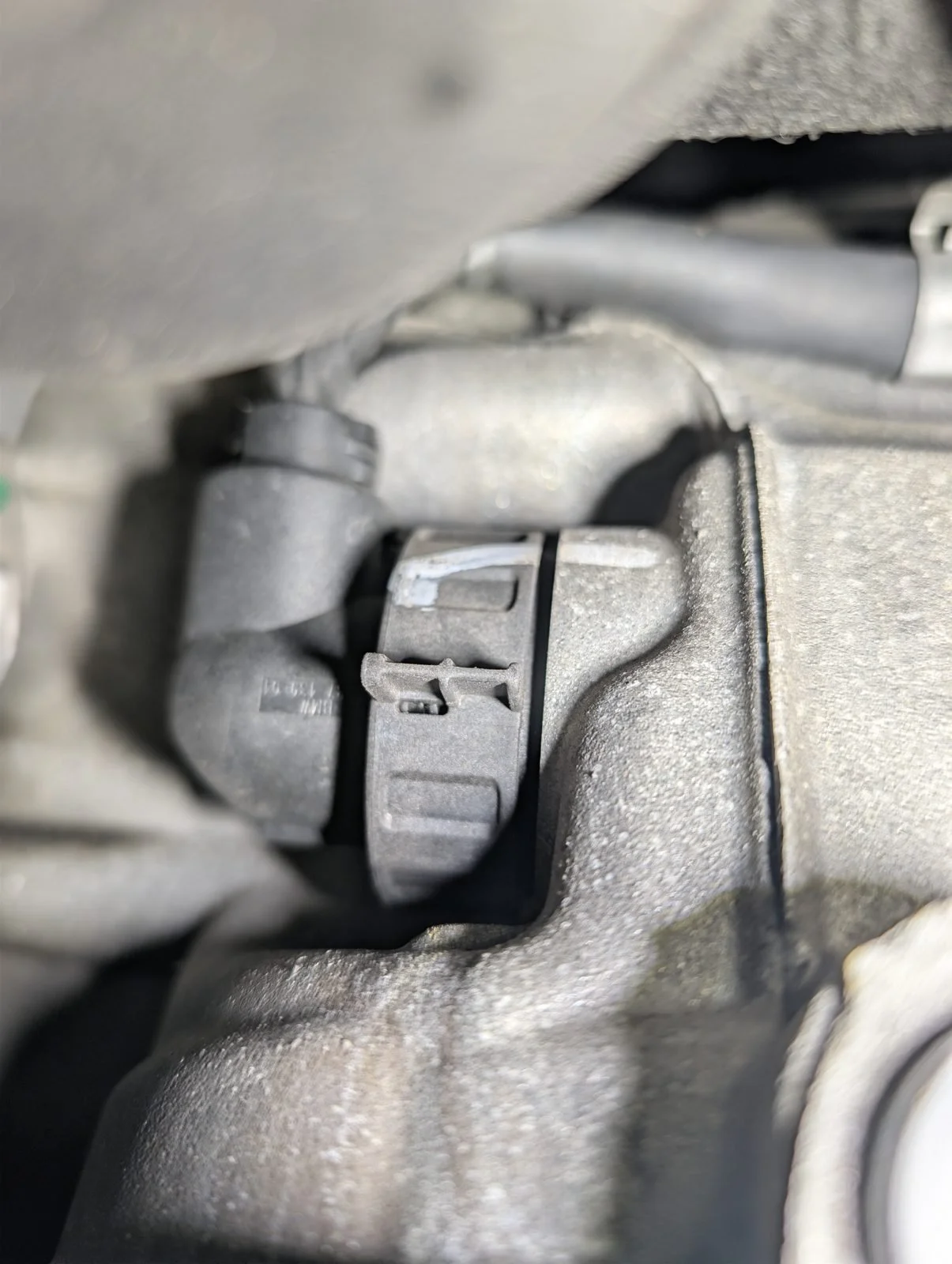
On a Discovery 3, early Discovery 4 or Range Rover Sport L320 with the ZF six-speed automatic, a common source of gearbox oil leaks is the connector sleeve, where the wiring plug passes through the side of the transmission case. It is often mistaken for a sump leak, and if left it can let fluid into the electrical connector and contribute to "Gearbox Fault" warnings and limp mode, so it is worth checking and, where it is leaking, replacing when the sump is off for a service.
Col Voss Automatic Transmissions is an independent transmission workshop in Brookvale on Sydney's Northern Beaches, operating since 1998, with technicians well trained in Land Rover and Range Rover diagnosis and repair.
What the connector sleeve is
The ZF 6HP26 and 6HP28 have their control unit and valve body (the mechatronic) inside the sump. The vehicle's wiring reaches it through a plastic sleeve, also called the guide sleeve or adaptor, that sits in a hole in the transmission case. The external plug locks onto it with a bayonet fitting.
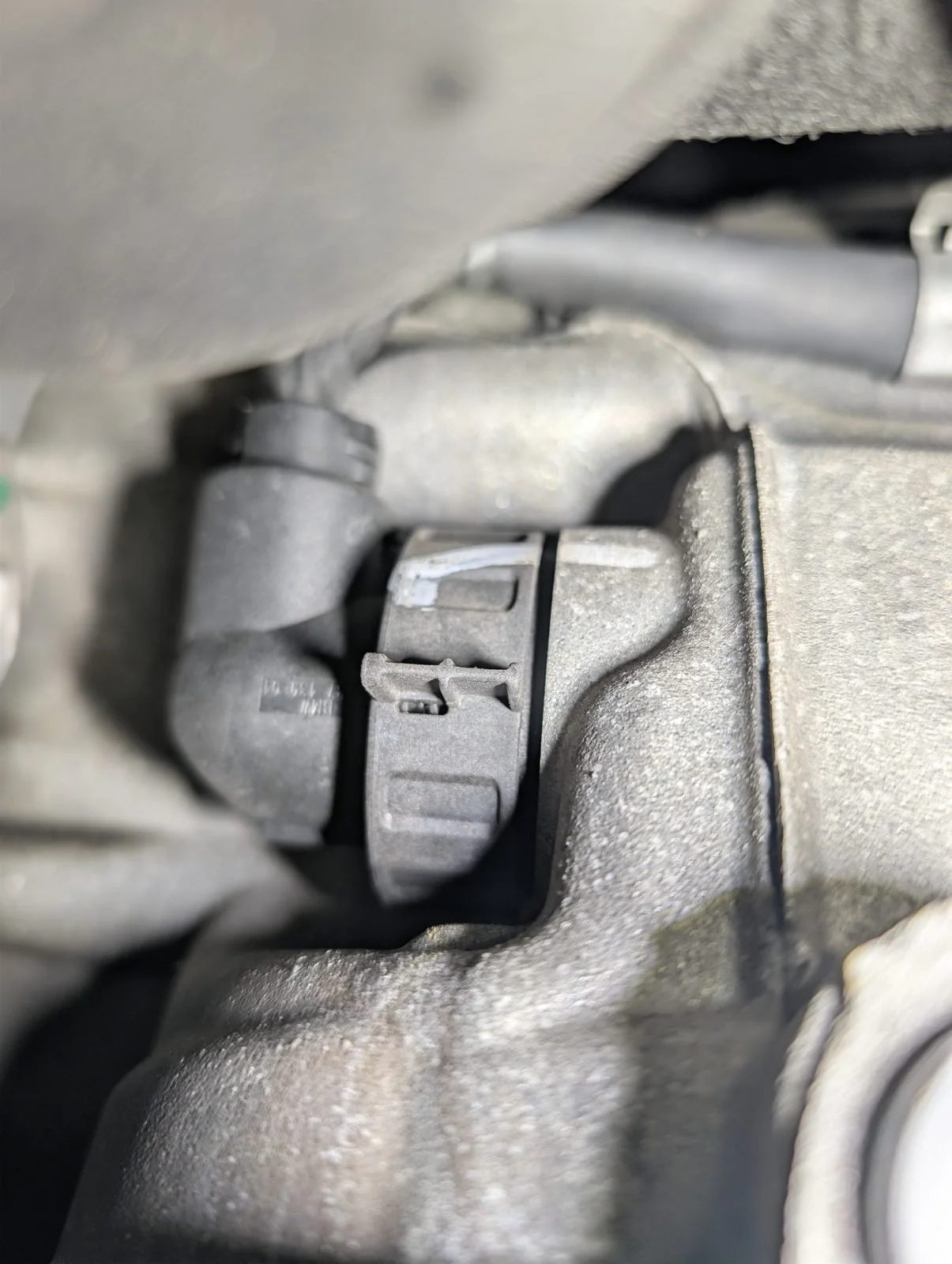
The connector sleeve and plug on a Range Rover's ZF six-speed. Photo taken in our Brookvale workshop.
The sleeve is sealed with O-rings. With age and heat those seals harden, and transmission fluid starts to weep past them. Land Rover lists the sleeve as part TZV500010, and ZF has published a service procedure for replacing it.
Which models use the 6HP
| Model | Transmission |
|---|---|
| Discovery 3 (about 2005–2009) | ZF 6HP26 |
| Discovery 4, 2.7 TDV6 (about 2009–2010) | ZF 6HP26 |
| Discovery 4, 3.0 TDV6 and 5.0 V8 (about 2009–2013) | ZF 6HP28 |
| Discovery 4, 3.0 SDV6 (from about 2012–2013) | ZF 8HP70 eight-speed |
| Range Rover Sport L320 (about 2005–2013) | ZF 6HP26 / 6HP28; 8HP70 on later 3.0 diesels |
| Range Rover L322 (about 2006–2012) | ZF 6HP26 / 6HP28; 8HP70 on the later 4.4 TDV8 |
Model years and cut-over dates vary by market, so we confirm the exact unit from your VIN. The eight-speed 8HP has its own connector sleeve and can weep in a similar way.
Why it gets mistaken for a sump leak
The sleeve sits low on the side of the case, just above the sump line. Fluid from it runs down and collects on the edge of the sump and the underbody, so it looks like the sump is leaking. On these vehicles the original sump is plastic with the filter built in, and it can weep too, which adds to the confusion.
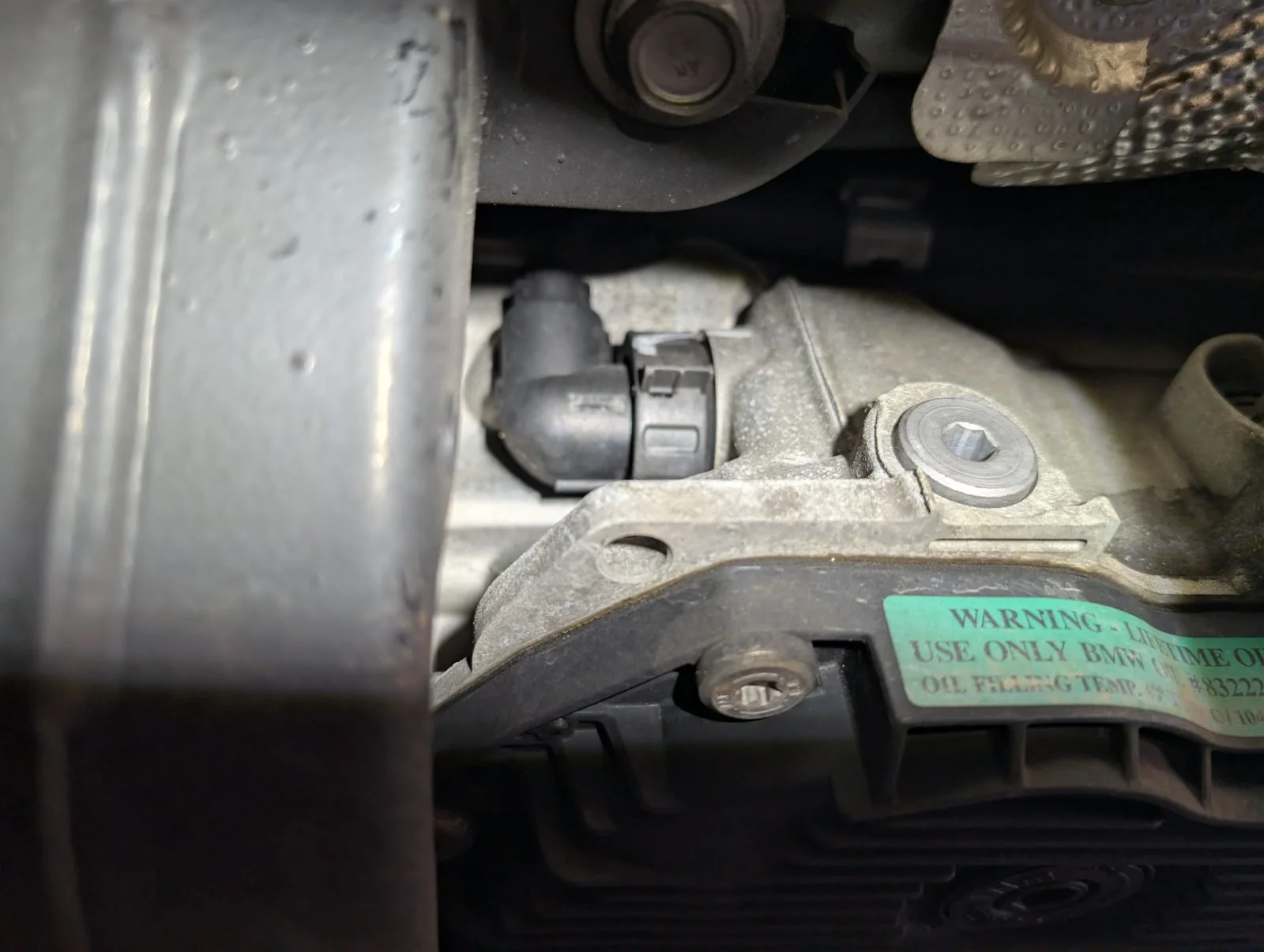
The sleeve sits just above the plastic sump, which is why a leak here is often mistaken for a sump leak.
Replacing the sump or tightening it will not stop a sleeve leak. The way to tell is to clean the area, look at where the fluid starts, and unplug the connector to check for fluid inside the plug.
What the leak does to the electrics
A weeping sleeve does two things. It slowly lowers the fluid level, sometimes with no obvious drip on the driveway. And because the leak path is also the wiring path, fluid can get into the connector and, in some cases, travel along the wiring harness.
Fluid in the connector can disturb the signals between the vehicle and the transmission control unit. That can contribute to:
- A "Gearbox Fault" or "Transmission Fault" message
- Limp mode, with the vehicle held in one gear
- Harsh, delayed or flaring gear changes
- Intermittent faults that come and go
- Fault codes that point at solenoids, pressure or communication
Low fluid from the leak can cause similar symptoms on its own. That is why a warning on these models should be diagnosed, not assumed to be internal failure. Our post on the Range Rover "Gearbox Fault" warning covers the other causes, including battery voltage.
Signs your sleeve may be leaking
- Red or brown fluid on the side of the transmission near the electrical plug
- Wetness along the sump edge on the same side
- Fluid inside the plug when it is disconnected
- The fluid level is low at a service with no other obvious leak
- Intermittent gearbox warnings or limp mode
A light film of oil around the sleeve is not always a reason to replace it. Actual fluid loss, or fluid inside the plug, is.
Why fix it at service time
To replace the sleeve, the sump has to come off. On the 6HP with its original plastic sump, the sump and filter are one part and are replaced together during a fluid service. So the sleeve can be done while the sump is already off, rather than draining the fluid and removing the sump a second time later.
At a 6HP fluid service we inspect the sleeve and connector, and if it is leaking or the plug is wet, we recommend replacing it at the same time. New fluid can also show up a weep that was not obvious before. The sleeve has to be fully seated and locked; a poorly fitted sleeve or a forced plug can itself cause connector faults.
A fluid service is maintenance. It is not a guaranteed fix for an existing fault. If a warning is showing, we assess the fault first.
Servicing and adaptations
During routine servicing we don't reset the transmission's adaptations unless the initial test drive shows a shift complaint. A reset can itself cause a shift complaint, which then needs further test driving while the transmission relearns.
Been told you need a replacement transmission?
If your Discovery or Range Rover Sport has a gearbox warning and a leak, get a transmission specialist's view before deciding. Sometimes a replacement is the right answer; sometimes the testing points to something smaller, such as a sleeve, a fluid level or a connector. Bring any report or quote you have, and we will tell you plainly whether our testing supports it.
Frequently asked questions
Why is my Discovery 4 leaking gearbox oil?
On Discovery 4 models with the ZF six-speed, common leak points are the connector sleeve where the wiring plug enters the transmission case and the plastic sump. Cooler lines and shaft seals can also leak. The source should be found before parts are replaced.
How can I tell a connector sleeve leak from a sump leak?
The sleeve sits just above the sump, so its fluid runs down onto the sump edge and looks like a sump leak. Cleaning the area, finding where the fluid starts and unplugging the connector to check for fluid inside it shows which one is leaking.
Can a connector sleeve leak cause a gearbox fault or limp mode?
It can. Fluid in the connector can disturb the signals to the transmission control unit, and the leak can also lower the fluid level. Either can contribute to a "Gearbox Fault" message, limp mode or poor shifting. Other causes, such as low battery voltage, can show the same warning, so it needs diagnosis.
Is it safe to keep driving with a gearbox oil leak?
A small weep is not usually an emergency, but it should be checked soon, because the fluid level drops over time and fluid can reach the connector. If the vehicle loses drive, overheats or drips fluid steadily, stop somewhere safe and arrange roadside assistance.
Why replace the connector sleeve during a transmission service?
The sump has to come off to replace the sleeve. Doing it while the sump is already off for a fluid service avoids draining the fluid and removing the sump a second time later.
Does my Discovery 4 have the 6HP or the 8HP transmission?
Earlier Discovery 4 models use the ZF six-speed 6HP26 or 6HP28. Later 3.0 SDV6 models, from about 2012–2013, use the ZF eight-speed 8HP70. We confirm the exact transmission from the VIN.
Book a Discovery or Range Rover Sport leak check
Call 02 9907 4486 or text 0483 932 155. You can also send an enquiry through our contact page with your registration or VIN, where you have seen the leak and any warning messages. A minimum diagnosis fee applies if diagnosis is needed. You can read more about our automatic transmission services.
Col Voss Automatic Transmissions
Unit 1, 128 Old Pittwater Road, Brookvale NSW 2100
Phone 02 9907 4486 · Text 0483 932 155